

When the mix sounds good in your home studio, but not everywhere else
You’ve spent months —maybe years— recording and producing at home. You’ve learned through tutorials, trial and error, and you have gear that’s cost you money and countless hours of work. The song sounds great on your monitors. Then you play it in the car, run it through any random Bluetooth speaker, or compare it to a professional production… and something just doesn’t add up. It sounds flat, too bass-heavy, or simply small.
This is one of the most common situations when working in a home studio: your ears get used to the shortcomings of the room and the monitoring system, which can mean that mixing decisions that sound right at home don’t translate the same way on other systems.
At Sentir Studios, PERCUMUSIC®‘s recording studio, we’ve spent years working with musicians and producers at different stages of the process, bringing space, equipment and experience exactly where they can make the biggest difference.
What a home studio really is
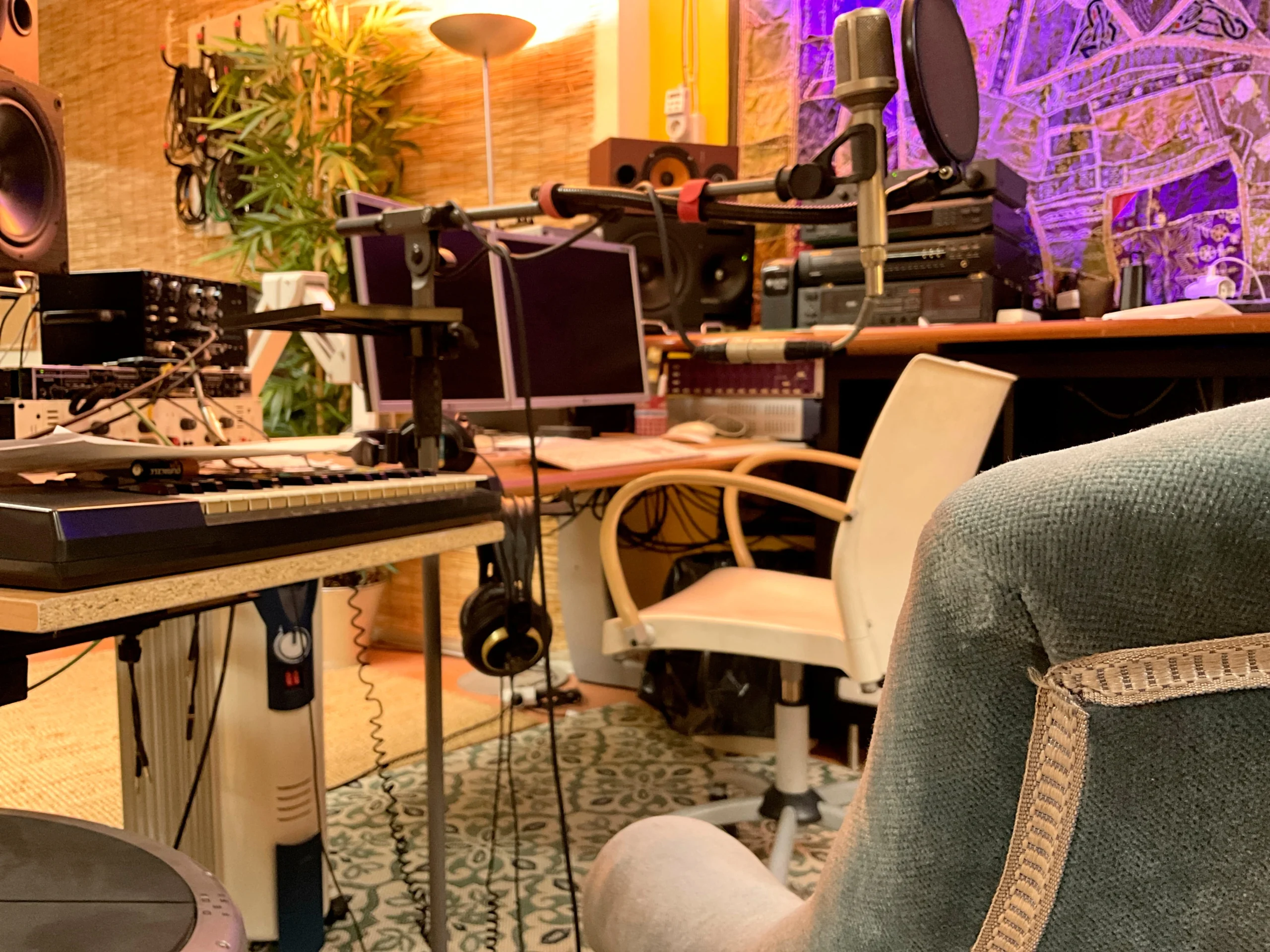
A home studio is, essentially, a recording space set up inside a home: a bedroom, a corner of the living room, or an improvised studio with a computer, an audio interface, monitors and a microphone or two. Today, it’s where a large part of the music we listen to comes from: accessible, immediate, and perfect for demoing and experimenting without the pressure of the clock or the invoice.
The problem isn’t the gear —today’s interfaces and plugins are very good and affordably priced. The problem, almost always, is everything a home studio can hardly change no matter how much money you throw at it: the room where you’re recording and mixing.
Three areas where a professional studio can make a difference
The room
A room at home —with parallel walls, windows and furniture designed for living, not for recording— creates resonances, reflections and frequency cancellations that your ears end up adapting to… but that any other playback system exposes right away. It’s the most common explanation for why a mix “sounds great here” and “sounds different everywhere else”.
The signal chain
A mid-range condenser microphone and a home interface can deliver perfectly decent results. But in a professional studio it’s common to find microphones, preamps and converters of a much higher calibre, with gear that can cost ten times more —or even more— without that meaning it sounds ten times better.
In fact, the difference isn’t always obvious in an immediate A/B comparison of a single piece of gear. It’s often about nuance: a bit more detail, a more natural response, more dynamics, a particular texture, more depth, or a better sense of three-dimensionality. These are small differences that, one after another, add up throughout the whole recording and production process. And it’s precisely that accumulation of small advantages that, in the end, gives a professional studio’s result a quality and solidity that’s hard to achieve with home gear.
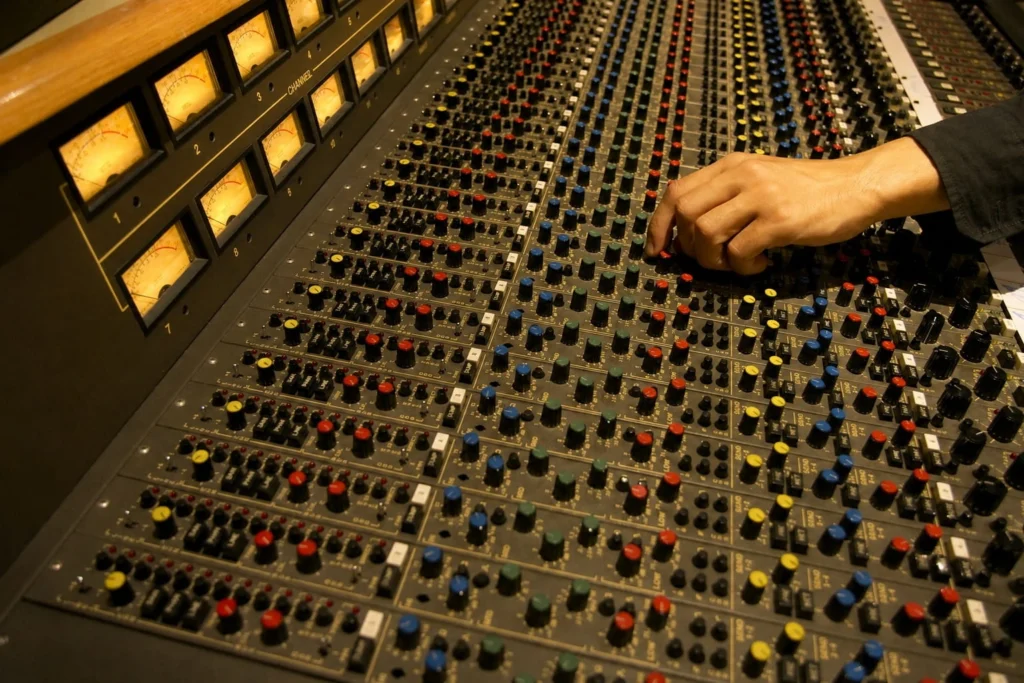
At Sentir Studios, for example, we have classic microphones from the 50s, 60s and 70s —Telefunken, Neumann, Schoeps, among others—, an analogue SONY-MCI console, high-end preamps, equalisers and analogue compressors, combined with converters and the latest digital gear. This combination lets us make the most of each unit’s character and choose, at every moment, the right tools to get the most out of every production.
The engineer’s ear
“It’s not the arrow, it’s the archer.” “It’s not the plane, it’s the pilot.” You’ve probably heard these sayings, and others like them, used to explain that the tool matters, but whoever’s using it matters even more.
This is one of the most important factors to consider in a recording studio. An engineer with years of experience listening, recording and mixing knows how to identify —and often prevent— many of the problems that can crop up during recording and mixing. They can spot a resonance at 300 Hz, catch a phase issue between a drum kit’s overhead mics, or realise a vocal needs to be recorded with a different microphone before reaching for EQ to fix it.
And, above all, they know how to make these decisions without ever losing sight of what matters most: the music. Because the best path isn’t necessarily the fastest or most automatic one, nor fixing a problem after the fact, but making the right call in the first place to avoid creating it.
At Sentir Studios we’re not just technicians: we’re musicians who’ve played, recorded and produced, and we put technique at the service of the music, not the other way around.
When does it make sense to go to a professional studio?
It’s not about deciding whether a home studio is «good» or «bad», or waiting until you reach some particular level. The question is simpler: what does your production actually need, and what can a professional studio genuinely offer that you can’t get at home?
There are a few situations where the decision becomes especially clear:
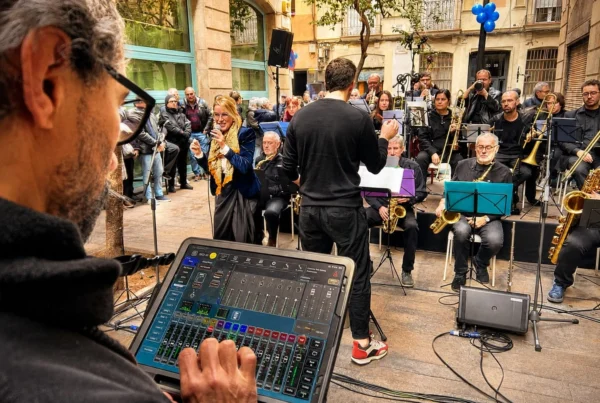
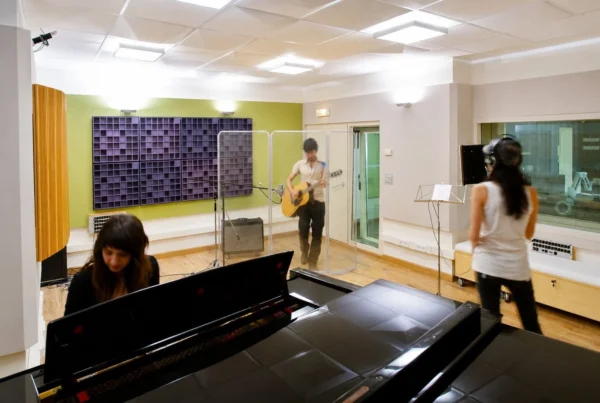
- When you need to record a band or several musicians playing at once. An acoustic drum kit, a piano, amplifiers and several musicians playing together require space, acoustics, microphones and an infrastructure that’s hard to reproduce in a bedroom. Especially for jazz, classical and other genres that need to capture the essence of what musicians express when they play together, all at once or section by section.
- When you want the recording to sound like a professional production. The right choice of microphones, preamps, acoustics and positioning can make a difference that’s very hard —sometimes impossible— to make up for later during the mix.
- When you have a particularly important or demanding production. A record release, a professional commission, a production for a client, or any project where the final result needs to match the quality of the music requires making a lot of technical and artistic decisions at the right moment. Working in an experienced studio can help prevent problems before they reach the mixing stage and get the most out of every recording.
- When you’ve spent a while trying to improve your results without getting the leap forward you’re after. Maybe the problem isn’t a lack of plugins, tutorials or hours in front of the computer, but that you need a different way of listening, recording and making decisions.
- When you want to make use of instruments and gear you don’t have at home. Specialised microphones, preamps, compressors, equalisers, converters, acoustic instruments or other resources can bring nuances and creative possibilities that aren’t available in a home studio.
And this doesn’t mean you have to do the whole production in a studio. An increasingly common option is to combine both worlds: working on composition, pre-production, programming or editing at home, and booking the professional studio for the recordings that really need it, as well as for mixing or mastering.
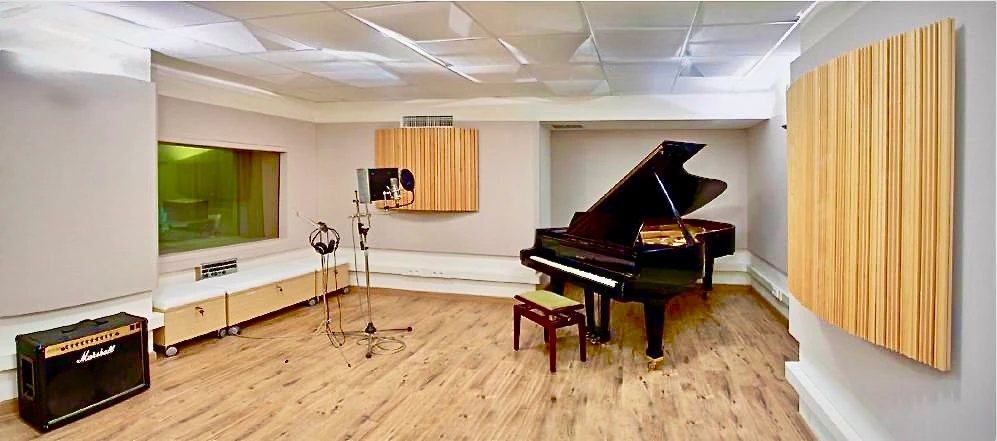
At Sentir Studios we often get involved in different stages of the same production: from recording a drum kit or the Petrof grand piano, to mixing a recording an artist made in their own home studio, or mastering a mix done at another studio. And one of the most common options is to make use of the studio’s gear and infrastructure for the recording and, once it’s done, take the tracks away to mix at home or elsewhere.
Why Sentir Studios?
Sentir Studios is much more than a set of soundproofed rooms. It’s a space with history in the centre of Barcelona, active since the 1970s, combining the best of the analogue and digital worlds: an analogue console, classic and current microphones, and a Petrof grand piano that’s been heard on countless jazz, classical and other recordings.
At the helm is Lluís Molas, sound engineer and musician, founder of PERCUMUSIC®, together with musician and producer Aurelio Morata and, more recently, Raül Fernández (Refree). If you’d like to know more about Lluís Molas and the activities he runs through PERCUMUSIC® beyond Sentir Studios, you can visit the About Us page.
We’re technicians and musicians at the same time, and it shows in every session: we listen with sensitivity, not just with our ears.
We have two fully equipped studios at Sentir Studios, in the heart of Barcelona’s Eixample, with capacity to record several musicians playing together. You’ll find us at C/ Casp 172, Ground Floor, 08013 Barcelona —by appointment only.
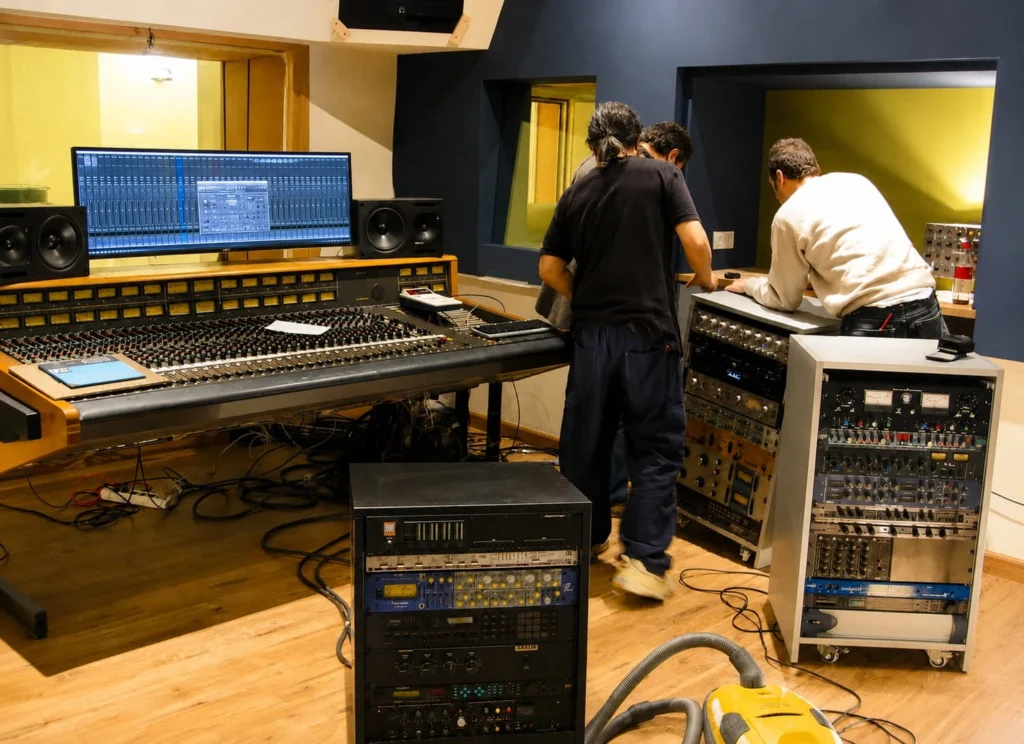
Every corner of the studio is designed for a different stage of the process: from the live room to this production and editing space, where we put the finishing touches on every track.
Frequently asked questions
What’s the difference between a home studio and a professional studio?
The main difference isn’t the gear you can see, but the room and the experience: a professional studio has treated acoustics, a chain of high-end microphones and equipment, and an engineer with years of craft who can solve in minutes problems that take much longer to spot at home.
When is it time to leave the home studio and record in a professional studio?
When your mixes don’t translate well to other systems, when you’ve gone a while without improving despite changing your gear, or when the project —a demo, a release, a commission— needs to sound good everywhere, not just on your speakers.
Can I combine a home studio with a professional studio?
Yes. You can do part of the process in your home studio and book the professional studio for the stages where it really makes a difference: recording, editing, mixing or mastering. You can also start at the studio and carry on at home. Every project can combine the two worlds differently.
How much does it cost to record in a professional studio in Barcelona?
The cost depends on how much time each project needs and which stages you want to do at the studio. Good planning and preparation beforehand make much better use of session time, and often make working in a professional studio more affordable than it might seem. Tell us what you want to do and we’ll help you plan it in the most efficient way.
When a professional studio can make the difference
A home studio can offer plenty of possibilities and let you work on much of a production with real freedom. But there are situations where having a professional studio brings a value that’s hard to replace.
There’s no need to abandon your home studio or wait until you reach some particular level. It’s about knowing when it makes sense to bring in a professional studio and making the most of everything it can add to your project.
At Sentir Studios we adapt to each project: we can step in for one specific stage or work alongside you through the whole process. You decide what you want to do at home and what you want to do at the studio.